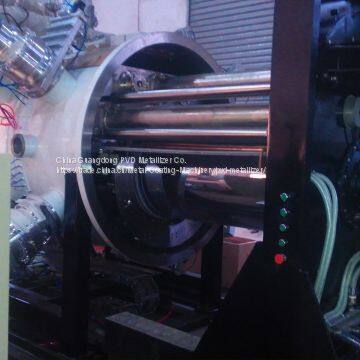

Types of sputter deposition
Types of sputter deposition
http://www.pvd-metallizer.com
Sputtering sources often employ magnetrons that utilize strong electric and magnetic fields to confine charged plasma particles close to the surface of the sputter target. In a magnetic field, electrons follow helical paths around magnetic field lines, undergoing more ionizing collisions with gaseous neutrals near the target surface than would otherwise occur. (As the target material is depleted, a "racetrack" erosion profile may appear on the surface of the target.) The sputter gas is typically an inert gas such as argon. The extra argon ions created as a result of these collisions lead to a higher deposition rate. The plasma can also be sustained at a lower pressure this way. The sputtered atoms are neutrally charged and so are unaffected by the magnetic trap. Charge build-up on insulating targets can be avoided with the use of RF sputtering where the sign of the anode-cathode bias is varied at a high rate. RF sputtering works well to produce highly insulating oxide films but with the added expense of RF power supplies and impedance matching networks.
Recently Posted
-
Ion-assisted deposition
May 31, 2017Ion-assisted deposition http://www.pvd-metallizer.com In ion-assisted deposition (IAD), the substrate is exposed to a se Read More
 -
Reactive sputtering
May 31, 2017Reactive sputtering http://www.pvd-metallizer.com In reactive sputtering, the sputtered particles undergo a chemical rea Read More
 -
Ion-beam sputtering
May 31, 2017Ion-beam sputtering http://www.pvd-metallizer.com Ion-beam sputtering (IBS) is a method in which the target is external Read More
 -
Sputter coating
May 31, 2017Sputter coatinghttp://www.pvd-metallizer.com Sputter coating in scanning electron microscopy is a sputter depositio Read More

Contact Us
Recommended Products
-
 Complete Manufacturing Machines for Electro-chromic Smart Glass (Turn-Key Project)US$ 12000000 - 13000000MOQ: 1 Set
 -
Complete Manufacturing Line for CIGS Solar Cell (Turn-Key Project)NegotiableMOQ: 1 Piece
-
Roll-to-Roll Web Coating MachineNegotiableMOQ: 1 Piece
-
Vertical Continuous Sputtering LineNegotiableMOQ: 1 Piece
-
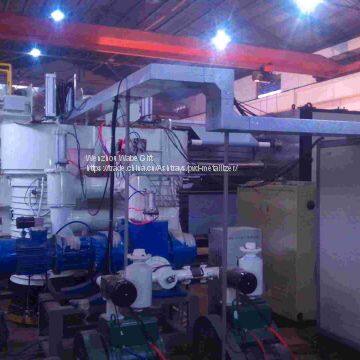
Experimental Evaporation Coater (with Resistance, E-beam, Induction and Ion Source, Etc.)NegotiableMOQ: 1 Piece




-
Experimental Magnetron Sputtering Coater With (DC/MF/RF/ion Source)NegotiableMOQ: 1 Piece
-
Pulsed Laser Deposition (PLD) MachineNegotiableMOQ: 1 Piece
-
Specialized Coating Equipment for EMI (Electro-Magnetic Interference) Film CoatingNegotiableMOQ: 1 Piece
-
Multi-functional MF Cathodic Arc PVD CoaterNegotiableMOQ: 1 Piece
-
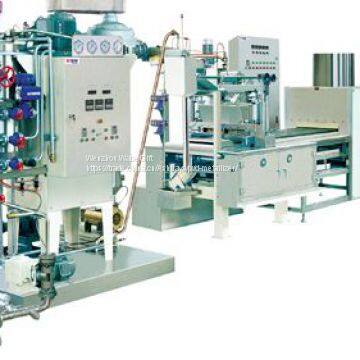
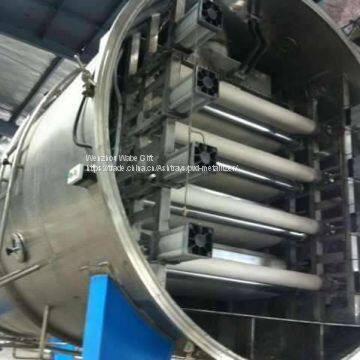
Vacuum DryersNegotiableMOQ: 1 Piece


-
Paints and Varnishes for Vacuum Metalizing CoatingUS$ 9999 - 999999MOQ: 10 Tons
-
TS-2440CJXW Magnetron Sputtering Line for Aluminum Mirror CoatingUS$ 500000 - 600000MOQ: 1 Piece
-
Sputtering Line for AZO/ITO Glass CoatingUS$ 880000 - 9900000MOQ: 1 Piece
-
Sputtering Line for Touch Screen ProductionUS$ 880000 - 9900000MOQ: 1 Piece
-
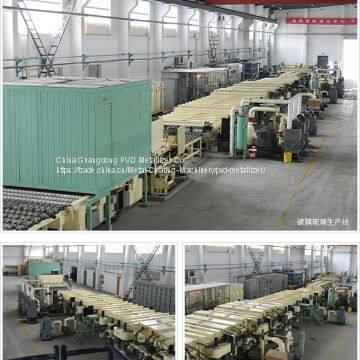
Newly Invented Cathodic Arc PVD Coater for Razor Blade CoatingUS$ 88000 - 99000MOQ: 1 Piece



-
Vacuum Sealing Machine for VIPUS$ 110000 - 150000MOQ: 1 Piece
-
Production Line for VIP Vacuum Insulated PanelUS$ 1100000 - 1500000MOQ: 1 Piece
-
Magnetron Sputtering Web CoaterUS$ 990000 - 2100000MOQ: 1 Piece
-
Magnetron Sputtering CoaterUS$ 99000 - 210000MOQ: 1 Piece
-
Large-Scale Cathodic Arc PVD CoaterUS$ 770000 - 990000MOQ: 1 Piece